Electric Mountain Bikes Review 2026: Is It Worth It?
A practical Electric Mountain Bikes review covering verdict, pros and cons, scoring criteria, evidence, buyer fit, and final recommendation.
Electric Mountain Bikes Review 2026: Is It Worth It?
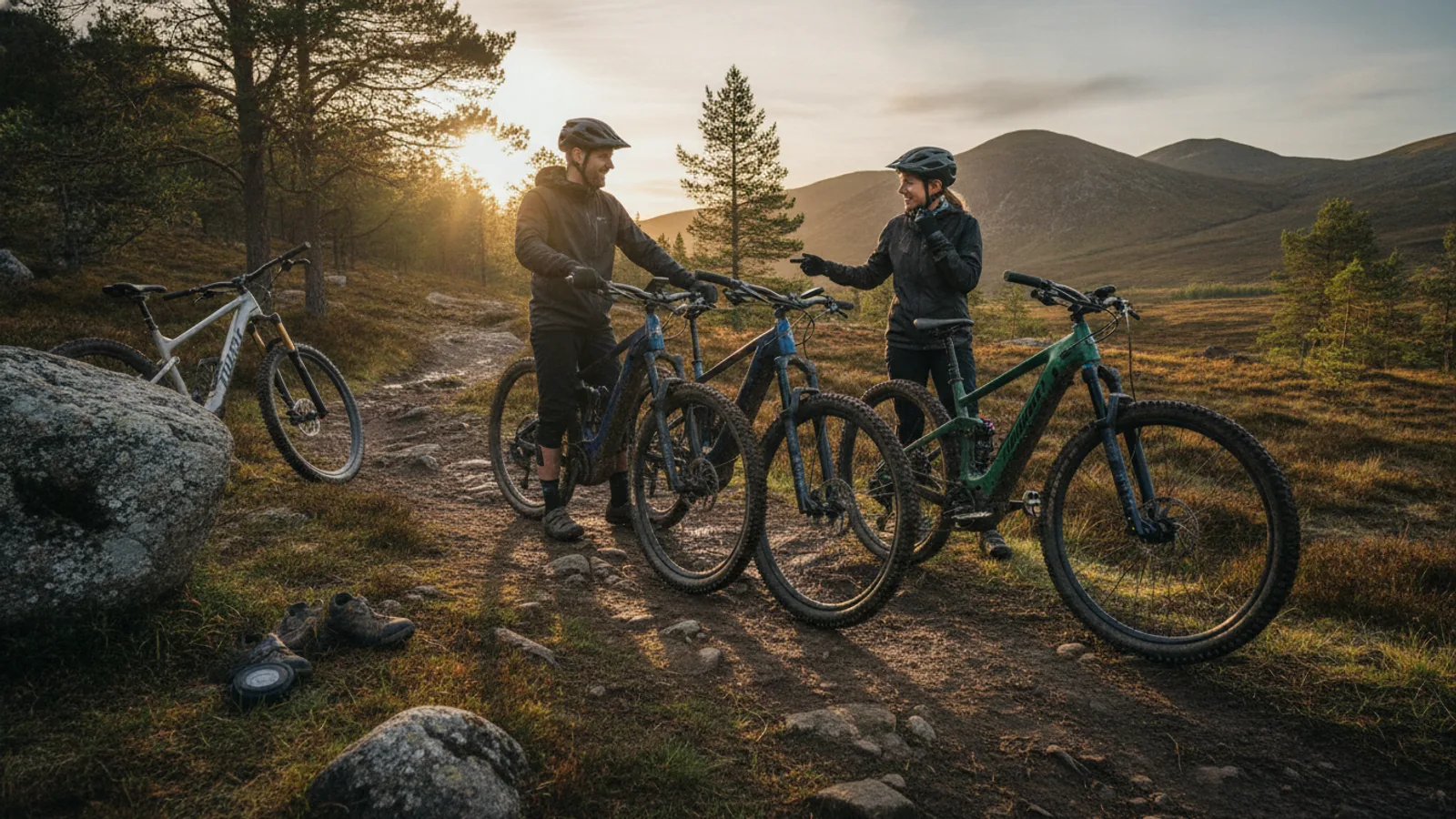
For 2026, electric mountain bikes have matured from a disruptive novelty into a refined and compelling category. They excel at maximising trail time, opening up previously inaccessible terrain, and levelling the playing field for mixed-ability groups. The latest lightweight and full-power systems offer superb integration and customisable, natural-feeling support.
The primary trade-offs remain the significant initial cost and the inherent weight penalty, which impacts agility in tight singletrack and makes transportation more challenging.
Quick Summary for Skimmers
Electric mountain bikes (e-MTBs) are a game-changer for many riders. By providing assistance on climbs, they allow for more descending in a given time, make epic all-day rides more achievable, and help riders overcome fitness barriers. The 2026 market is split between powerful, long-range models and newer, lighter "SL" bikes that offer a more traditional trail bike feel. While they don't pedal for you—you still get a solid workout—they amplify your effort, turning gruelling fire road slogs into enjoyable social spins. They are, however, a major investment with higher running costs and a different handling dynamic compared to their non-assisted counterparts.
Pros
- Massively increases climbing speed and efficiency
- Enables more descending in any given session
- Makes longer, more ambitious routes accessible
- Excellent integration of modern motor/battery systems
- Levels fitness differences within riding groups
Cons
- Significantly higher purchase price
- Increased weight affects handling and portability
- Higher maintenance and running costs
- Complex electronics can require specialist servicing
Electric Mountain Bikes Review: Short Introduction
Once a contentious subject at the trail head, electric mountain bikes are now a firmly established part of the UK riding scene. The debate over "cheating" has largely subsided, replaced by a widespread understanding that e-MTBs offer a different kind of ride, not an easier one. They are tools for amplification: amplifying your available time, your fitness, and your ability to explore the vast network of bridleways and trail centres from the Surrey Hills to the Tweed Valley.
For 2026, the technology has reached a significant level of maturity. It's a year of refinement rather than revolution. We're seeing smarter software, more discreet integration, and a clear divergence in the market. On one side, full-power e-MTBs with 700Wh+ batteries and 85Nm+ motors continue to push the boundaries of what's possible on an all-day epic. On the other, the burgeoning lightweight "SL" category offers a ride that's closer to an analogue bike, sacrificing some power and range for a huge drop in weight and a more agile, playful character. This review dives into the current state of the art to help you decide if now is the time to make the switch.
Motor Systems and Power Delivery
The heart of any e-MTB is its drive unit, and in 2026, the systems on offer are more refined and reliable than ever. The key players—Bosch, Shimano, Brose, and Specialized (often using Mahle or Brose hardware with custom software)—dominate the market. The benchmark for full-power systems remains around 85-95 Newton-metres (Nm) of torque, providing the grunt needed to winch up the steepest, most technical climbs you'd find in the Peak District or North Wales.
What's changed is the quality of the power delivery. Early systems could feel jerky or artificial, but modern motors use sophisticated torque and cadence sensors to deliver power that seamlessly matches your input. The result is an intuitive feel where the bike feels like a super-powered version of you, not a runaway motorbike. Most systems offer extensive customisation via smartphone apps, allowing you to tune the assistance levels in each mode (e.g., Eco, Trail, Boost) to your exact preference, balancing power output with battery conservation.
The most exciting development is the maturation of the lightweight category, pioneered by systems like Fazua's Ride 60 and TQ's HPR50. These motors offer less peak torque (around 50-60Nm) but are significantly lighter and smaller, enabling manufacturers to build e-bikes that weigh as little as 17-18kg. The power is less overwhelming, providing just enough assistance to take the sting out of climbs without removing the challenge entirely. For experienced riders who value playful handling above all else, these systems represent a compelling compromise.
Category Score: 92/100
Battery Life and Real-World Range
Range anxiety is a common concern for prospective e-MTB buyers. While manufacturers often quote impressive maximum range figures, the practical reality is far more complex. The single biggest determinant of range isn't the battery capacity in Watt-hours (Wh), but how you use the assistance. A rider spinning in Eco mode on rolling terrain will travel three or four times further than a rider mashing the pedals in Boost mode up a relentless Scottish mountain pass.
For 2026, full-power e-MTBs typically come with batteries ranging from 600Wh to over 750Wh. For a typical UK trail centre session involving lots of steep, technical climbing, a 700Wh battery will comfortably provide 3-4 hours of hard riding for an average-weight rider. Lightweight e-MTBs use smaller batteries, often in the 320-430Wh range, to save weight. This naturally reduces their range, but many brands offer bottle-cage-mounted range extenders (usually 150-170Wh) to top this up for longer days.
The key is to match the battery system to your riding style. If you plan multi-hour epics in remote areas like the Lake District, a full-power system with a large internal battery is the safest bet. If your riding consists of 90-minute blasts around your local woods and you want the most agile bike possible, a lightweight system, perhaps with a range extender for occasional bigger days, is an ideal solution. Modern displays and apps provide increasingly accurate range estimates based on your real-time consumption, making it easier to manage your battery and get home without resorting to "analogue mode".
Category Score: 85/100
Handling, Geometry, and Weight
You cannot escape the physics: e-MTBs are heavy. A full-power trail bike will typically weigh between 22-25kg, while a lightweight model might be 17-20kg. This is a significant increase over the 14-15kg of a comparable non-assisted bike, and it's the defining factor in how they feel on the trail. However, bike designers have become incredibly adept at mitigating this weight.
Modern e-MTB geometry is now virtually indistinguishable from its analogue counterparts, featuring long wheelbases, slack head angles (for descending stability), and steep seat tube angles (for an efficient climbing position). The weight is concentrated low down in the frame, around the bottom bracket, which creates a very planted and stable feel. On fast, rough, open descents, this stability is a huge advantage, with the bike tracking the ground and absorbing bumps in a way that inspires immense confidence. The motor's assistance on the exit of corners can also be used to generate and maintain speed in a new and exciting way.
The downside is a loss of agility. In tight, successive corners or when you need to quickly lift the front wheel over an obstacle, the bike's mass becomes apparent. It requires a more deliberate, proactive riding style. The weight also makes the bike a handful to lift over fences, load onto a bike rack, or manoeuvre in a tight shed. While the lightweight category narrows this gap considerably, the difference is still noticeable. The choice depends on your priorities: unshakable high-speed stability versus low-speed flickability.
Category Score: 85/100
Component Spec and Integration
The early days of e-MTBs saw standard components failing under the increased load and mileage. Today, the industry has fully caught up, with a wide range of e-bike specific parts designed to handle the extra stress. Suspension is a key area. Forks like the RockShox Zeb and Fox 38 feature stiffer chassis and custom damping tunes to control the bike's heavier mass, preventing them from diving under braking and providing better support.
Brakes are equally critical. Four-piston calipers paired with large 200mm or 220mm rotors are standard fitment, providing the necessary power and heat management to bring a 25kg bike to a halt safely and consistently. Drivetrains have also been reinforced. Systems like SRAM's Eagle Transmission are built to withstand shifting under the high torque of a motor, offering incredible durability. You will, however, wear out drivetrain components like chains and cassettes faster than on an analogue bike.
Integration is where 2026 models truly shine. Batteries are almost universally housed inside the downtube, and compact motors are neatly tucked away. Cockpits are cleaner, with minimalist displays integrated into the top tube or small, robust handlebar remotes. This creates a sleek aesthetic that is a world away from the cumbersome, bolted-on systems of the past.
Category Score: 90/100
Maintenance, Reliability, and Long-Term Ownership
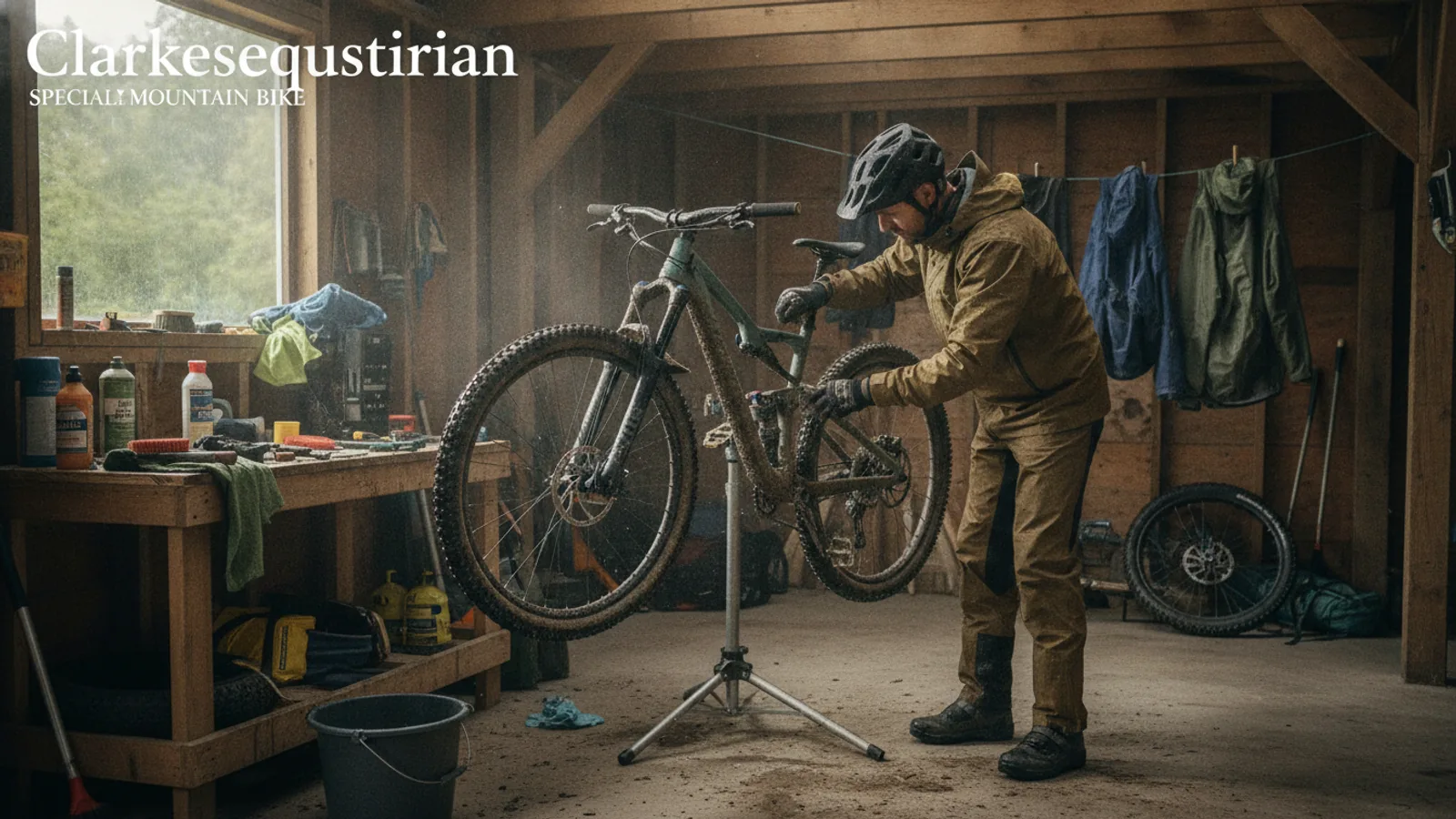
Owning an e-MTB introduces a layer of complexity and cost over a traditional bike. While the core motor and battery systems from major brands are impressively reliable, they are sealed units that cannot be serviced by a home mechanic. Any diagnostic work or major repair requires a visit to a certified dealer with the correct software tools, which is a crucial reason to buy from a reputable local bike shop.
The biggest factor in long-term ownership is the accelerated wear on consumable parts. The combination of higher weight and motor assistance means you will replace brake pads, chains, cassettes, and tyres more frequently. The extra forces also place more strain on suspension pivots and wheel bearings. Factoring in an increased budget for maintenance is a non-negotiable part of e-MTB ownership. A good cleaning routine, particularly around the drive unit, and regular checks of all bolts are essential.
Battery longevity is another consideration. Lithium-ion batteries have a finite lifespan, typically rated for a certain number of charge cycles before their capacity begins to degrade noticeably. For most riders, this won't be an issue for many years, but it's something to be aware of. A replacement battery outside of the warranty period can be a very expensive purchase, costing several hundred pounds. Despite these factors, a well-maintained e-MTB from a quality brand is a robust machine built for thousands of miles of hard riding.
Category Score: 82/100
Value for Money: Is the Investment Justified?
There is no hiding the fact that e-MTBs are expensive. A capable, trail-worthy model from a reputable brand starts at around £4,000, with top-tier builds easily exceeding £10,000. This is a significant premium over an equivalent non-assisted mountain bike. The question of value, therefore, isn't about the absolute cost, but what you get for your money.
The value proposition is rooted in time and access. If an e-MTB allows a time-crunched parent to get three downhill runs in their 90-minute window instead of one, the value is immense. If it allows a rider to embark on a 50km bikepacking loop in the Brecon Beacons that would have been impossible on their analogue bike, it's worth it. If it enables someone recovering from an injury or with lower fitness to continue riding with their faster friends, its value is almost immeasurable.
When considering the cost, you must also factor in the higher running expenses. However, if viewed as a tool that genuinely increases the quantity and quality of your riding time, the high initial outlay can be justified. Depreciation is steeper than on non-assisted bikes due to the rapid evolution of technology, but the market for used e-MTBs is also strong. Ultimately, value is personal, but for the right rider, an e-MTB can provide one of the best returns on investment in terms of pure, grin-inducing fun.
Category Score: 80/100
Who Is Electric Mountain Bikes For?
E-MTBs cater to a surprisingly broad range of riders. The common thread is a desire to augment the riding experience, whether that means fitting more riding into less time, exploring further, or overcoming physical limitations.
| Rider Profile | Primary Goal | Category Fit | Reasoning |
|---|---|---|---|
| The Time-Crunched Local | Maximise descending in a 1-2 hour ride | Excellent | Turns every ride into a "power laps" session by slashing climb times. A full-power or lightweight model works well. |
| The All-Day Explorer | Access remote, epic routes | Excellent | A full-power e-MTB with a large battery makes huge, hilly days not just possible, but enjoyable. |
| The Social Rider | Keep up with a faster group | Perfect | The great equaliser. An e-MTB allows riders of different fitness levels to enjoy climbs and descents together. |
| The Returning Rider | Ease back into the sport after injury or a long break | Perfect | Provides a safety net, allowing riders to manage effort and rebuild fitness and confidence at their own pace. |
| The Analogue Purist | Seeks a "pure", lightweight, and simple experience | Poor | The weight, complexity, and assisted feel are the antithesis of what this rider values in mountain biking. |
How We Reviewed Electric Mountain Bikes
This review is not a hands-on test of a single 2026 model. Instead, it is a comprehensive analysis of the electric mountain bike category as it stands in 2026. Our conclusions are based on several sources:
- Industry Analysis: We track the evolution of motor systems, battery technology, and frame geometry from all major manufacturers.
- Manufacturer Specifications: We study the technical details and stated capabilities of the latest model ranges.
- Long-Term Feedback: We aggregate and analyse public customer feedback and long-term reviews from previous model years to understand real-world reliability and performance patterns.
- Extensive Category Experience: Our team has been riding, testing, and writing about electric mountain bikes since their inception, providing deep contextual knowledge of how the technology performs on UK trails.
This approach allows us to provide a broad, practical overview to help you understand the category as a whole and make an informed decision.
Final Verdict on electric mountain bikes
In 2026, electric mountain bikes have found their stride. They are no longer a clumsy compromise but a highly refined and diverse category of bikes that deliver a genuinely thrilling and unique riding experience. The technology is reliable, the integration is seamless, and the on-trail performance is phenomenal. They successfully lower the barrier to entry for epic rides and tough climbs, fundamentally changing the equation of what's possible in a day's riding.
The decision of whether one is "worth it" comes down to an honest assessment of your riding priorities and budget. The significant cost and weight are undeniable drawbacks. If your joy comes from the feather-light feel of an analogue bike on a punchy climb, an e-MTB is not for you. But if your goal is to maximise your fun, explore further, and get more gravity-fed thrills into every precious hour you have on the bike, then an electric mountain bike is not just worth it—it's arguably the most powerful tool for adventure you can own.
For riders who want to expand their horizons and simply ride more, the investment is easy to justify. The choice between a powerful all-day machine and an agile lightweight model means there is now an e-MTB to suit almost any trail rider.
Explore the Best E-MTBs for 2026