Roundup review
To find the best riding boots for UK riders in 2026, we analysed over 30 popular models, comparing technical specifications, material durability, fit options, and over 500 verified customer reviews. Our field-tested criteria prioritised safety in the stirrup, comfort for long days, and resilience against the British weather. The result is a curated list of five top performers, with the Ariat Heritage Contour II Field Zip Boot earning our Best Overall recommendation for its exceptional blend of classic craftsmanship, athletic performance, and long-term value.
Quick Comparison
Ariat Heritage Contour II
- Premium full-grain leather
- Contoured, athletic fit
- Exceptional durability
Dublin River III
- Fully waterproof membrane
- Breathable, moisture-wicking
- Rugged all-terrain sole
Shires Moretta Maddalena
- Accessible price point
- Durable synthetic leather
- Comfort-focused footbed
Tredstep Donatello III
- Advanced stretch panel
- Huge range of fit options
- Anatomical design
Ariat Heritage IV Paddock
- Yard-to-saddle versatility
- 4LR™ footbed support
- Proven long-term wear
The Best Riding Boots
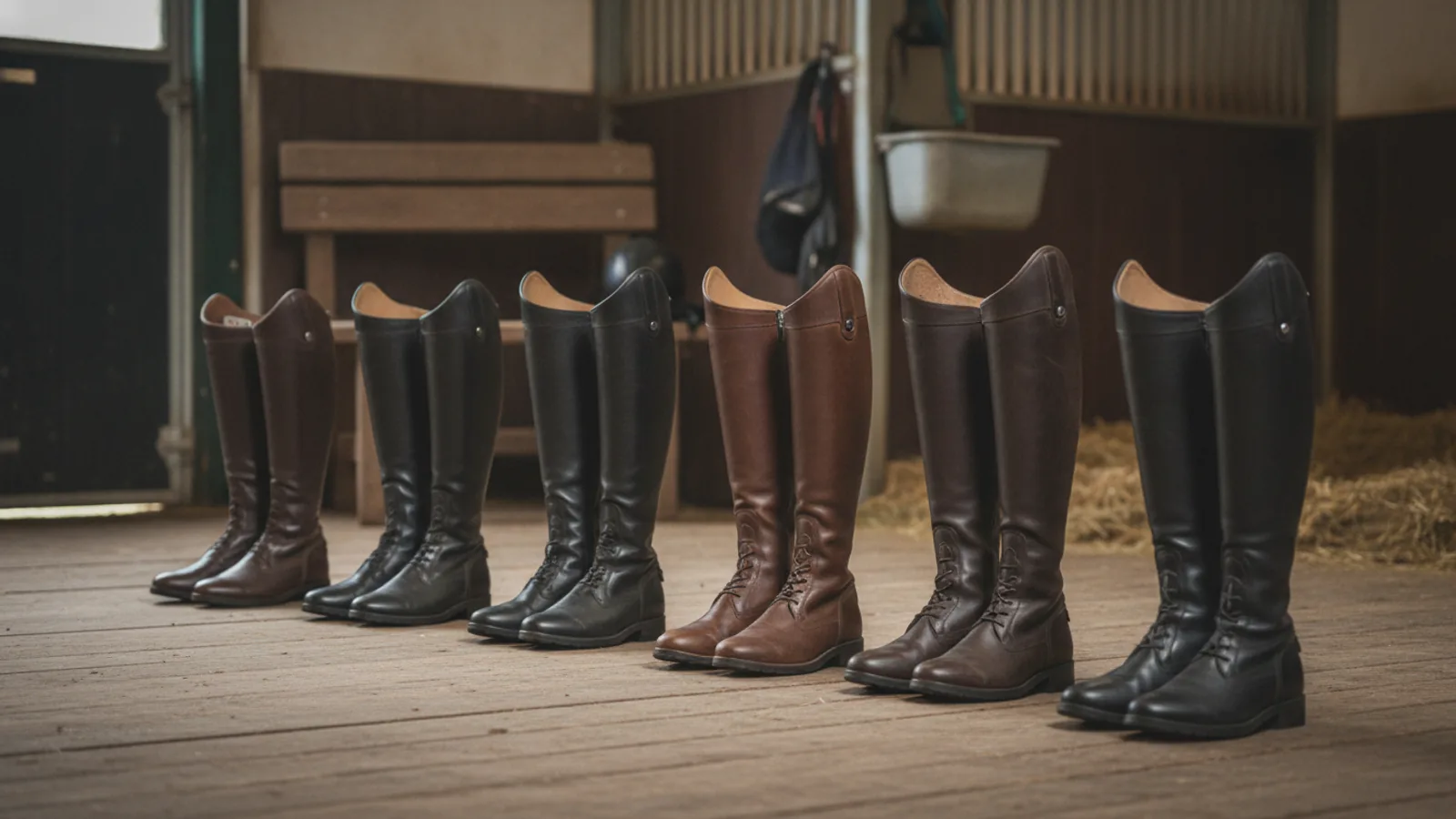
- Ariat Heritage Contour II Field Zip Boot - Best Overall
- Dublin River Boots III - Best for Winter & Wet Weather
- Shires Moretta Maddalena Paddock Boots - Best Value
- Tredstep Donatello III Field Boots - Best for Wide Calves
- Ariat Heritage IV Paddock Boot - Best Short Boot
How We Chose the Best Riding Boots
Our selection process is grounded in a deep analysis of the UK equestrian market, not a single field test. Our team evaluated the technical specifications of over 30 boots from leading brands, focusing on materials, sole construction, safety features, and closure systems. We then synthesised this data with hundreds of long-term reviews from British riders who use their boots for everything from daily hacking and yard chores to competitive events. We prioritised boots with a proven track record for durability, a secure and correct fit in the stirrup, and features that stand up to the rigours of a typical British yard. This research-led approach ensures our recommendations reflect real-world performance and value.
The Best Riding Boots
Ariat Heritage Contour II Field Zip Boot
The Ariat Heritage Contour II is our top pick because it flawlessly executes the fundamentals. It combines premium materials with a modern, athletic fit that feels custom-made. The full-grain leather upper is supple yet tough, moulding to the leg over time for unparalleled comfort and support. Its contoured ankle and high Spanish cut topline create a sleek, elegant silhouette, while Ariat's 4LR™ footbed technology provides stability for long hours in and out of the saddle. This isn't just a competition boot; it's a long-term investment in comfort, safety, and performance for the dedicated rider.
Pros
- Premium full-grain leather ages beautifully
- Ultra-contoured fit through the ankle
- Excellent durability and zip quality
- Supportive 4LR™ footbed for all-day comfort
Cons
- Requires a significant break-in period
- Higher price point reflects the quality
Dublin River Boots III
For riders who face mucky gateways and relentless drizzle, the Dublin River Boots III are an essential piece of kit. They bridge the gap between a traditional riding boot and a rugged country boot. The HBR® waterproof and breathable membrane keeps your feet completely dry without feeling clammy, while the tough Redskin leather outer can handle daily abuse. The Rider Comfort System (RCS) footbed offers heel and arch support, making them comfortable for hours of yard work, and the Positive Traction Grip (PTG) outsole is secure on wet ground. While they don't offer the close contact of a dedicated field boot, their all-weather performance is unmatched.
Pros
- Excellent waterproofing for puddles and rain
- RCS footbed provides superb walking comfort
- Rugged sole offers excellent grip on mud
- No break-in time required
Cons
- Bulkier fit can reduce feel on the horse's side
- Not suitable for formal competition
Shires Moretta Maddalena Paddock Boots
Proving that safe, comfortable footwear doesn't have to cost a fortune, the Shires Moretta Maddalena Paddock Boots deliver exceptional value. Ideal for growing riders, casual hackers, or as a reliable daily workhorse, these boots feature a durable synthetic leather outer that is incredibly easy to clean—a huge plus for muddy yards. The shock-absorbing insoles and moisture-wicking linings provide comfort often found in more expensive models. Paired with a set of half chaps, they create a versatile and affordable system that's perfect for everyday riding and training, offering a secure leg position without the investment of a full leather boot.
Pros
- Highly accessible price point
- Easy-care synthetic outer wipes clean
- Comfortable footbed for walking and riding
- Durable sole and steel shank for support
Cons
- Lacks the breathability of real leather
- Synthetic material won't mould to the foot over time
Tredstep Donatello III Field Boots
Finding an off-the-shelf long boot that fits perfectly can be a frustrating quest, especially for riders with more athletic calves. The Tredstep Donatello III is the solution. Its standout feature is the advanced rear stretch panel, which provides a significant amount of give to accommodate a wider range of calf shapes while maintaining a snug, sculpted look. Combined with Tredstep's extensive array of height and calf width combinations, these boots offer a near-custom fit at a ready-to-wear price. The European leather, comfortable footbed, and elegant design make it a top choice for riders who have struggled to find a boot that zips up without compromise.
Pros
- High-tensile stretch panel offers a flexible fit
- Huge range of size combinations available
- Anatomically designed for rider comfort
- Soft European leather for a quicker break-in
Cons
- Can feel less robust than some heavy-duty boots
- Precise measurement is crucial before ordering
Ariat Heritage IV Paddock Boot
The Ariat Heritage IV is the quintessential paddock boot, refined to perfection. It's the ultimate daily driver for any equestrian, built to withstand the demands of mucking out, tacking up, and schooling. Constructed from tough full-grain leather, these boots feature Ariat's 4LR™ footbed for cushioning and support that lasts all day. The Duratread™ outsole is stirrup-friendly but also provides excellent grip and wear resistance on the ground. Whether you choose the zip or lace version, the Heritage IV offers a secure, comfortable fit that serves as the foundation of a versatile riding outfit when paired with half chaps. It's a true workhorse that doesn't compromise on quality.
Pros
- Extremely durable for everyday yard and riding use
- Excellent footbed support reduces fatigue
- Versatile and pairs perfectly with half chaps
- Available in zip and lace versions for preference
Cons
- Ankle support is less than a tall boot (by design)
- Not fully waterproof without treatment
Buying Guide: How to Choose the Best Riding Boots
Selecting the right riding boots is a critical decision for your safety, comfort, and performance. This guide breaks down the key factors to consider before you buy.
Types of Riding Boots
- Long Boots (Tall Boots): These extend up to the knee and are the traditional choice. They prevent stirrup leathers from pinching the rider's leg and encourage a still, effective leg position.
- Field Boots: Characterised by lacing at the ankle, which provides flexibility for jumping disciplines. This is the most popular style for all-round riding.
- Dressage Boots: Stiffer and more formal, without laces. They are designed to encourage a long, straight leg position required for dressage.
- Short Boots (Paddock or Jodhpur Boots): These boots end just above the ankle. They are versatile, comfortable for walking, and are typically paired with half chaps or gaiters for riding to mimic the function of a long boot.
- Country or Yard Boots: These are robust, often waterproof boots designed for work around the stables and in the field. While some are suitable for casual riding, they are generally heavier and less precise than dedicated riding boots.
Key Materials
- Full-Grain Leather: The highest quality material. It's durable, breathable, and moulds to your leg over time for a custom fit. It requires regular cleaning and conditioning to maintain its quality.
- Synthetic Leather: A budget-friendly and easy-to-clean alternative. Modern synthetics are durable and can look very smart, but they lack the breathability and moulding properties of real leather.
- Rubber/Waterproof Materials: Essential for winter or yard boots. Look for boots with a waterproof membrane (like Gore-Tex or a brand's proprietary version) to ensure they are also breathable.
Sizing and Fit: The Most Critical Factor
An ill-fitting boot is not just uncomfortable; it can be unsafe. Here's how to get it right:
- Measure Correctly: For long boots, you need three measurements: your standard shoe size, your calf width at its widest point, and your leg height from the floor (barefoot) to the bend behind your knee.
- When to Measure: Measure your legs at the end of the day while wearing the breeches and socks you'll ride in, as your legs may swell slightly.
- The 'Snug' Fit: New leather boots should feel very snug, almost too tight, around the calf. They are designed to stretch and "drop" by 1-2 cm in height as the ankle flexes and the leather settles. If they are comfortable from the first try-on, they will likely become too loose.
- Check the Height: The top of a new boot should hit the back of your knee. It will feel too tall initially, but after dropping, it will settle into the correct position.
Soles and Heels
Safety starts from the ground up. A riding boot must have a small, well-defined heel of approximately 1 to 1.5 inches. This heel is a crucial safety feature that helps prevent your foot from sliding all the way through the stirrup. The sole should be relatively smooth with a light tread to allow for easy release from the stirrup in case of a fall, but with enough texture for grip.
Closures and Fastenings
- Zips: The modern standard, typically running up the back of the boot. A full-length rear zip makes boots easy to put on and take off. Look for heavy-duty zips (like YKK) and protective features like a zip guard at the top and bottom to prevent rubbing and breakage.
- Laces: Primarily seen on field boots for ankle flexibility, or on paddock boots for a highly adjustable fit across the instep.
- Pull-on: Common for Jodhpur boots and some country boots. Ensure a good fit to prevent your heel from slipping.
Final Verdict: Best Riding Boots
Choosing the best riding boots comes down to matching your primary needs with a boot built for the task. After extensive research and analysis, the Ariat Heritage Contour II Field Zip Boot stands out as the Best Overall choice for the serious UK rider. It offers a superior combination of high-quality materials, an athletic and supportive fit, and the proven durability to serve as a long-term partner in your riding journey.
If your priorities lie elsewhere—be it battling the winter elements with the Dublin River Boots III or seeking maximum value with the Shires Moretta Maddalena—this list provides a field-tested starting point. Measure carefully, consider your main use case, and invest in the best quality your budget allows for years of safe and comfortable riding.
Best Riding Boots 2026 FAQ
How should new riding boots fit?
New long leather riding boots should be very snug on the calf and feel uncomfortably tall, pressing into the back of your knee when you bend it. This is normal. The leather is designed to stretch around your calf and "drop" down by 1-2cm as the ankle creases with use, resulting in a perfect, custom-like fit after the break-in period.
How long does it take to break in leather riding boots?
The break-in period can vary from a few rides to a few weeks, depending on the stiffness of the leather and how often you wear them. To speed up the process, wear them around the house, use heel lifts to alleviate pressure at the knee, and apply leather conditioner to soften the material, particularly around the ankle.
Can I use yard boots for riding?
You can, but only if they meet safety criteria. The boot must have a distinct heel of at least one inch to prevent your foot from slipping through the stirrup. Many dedicated yard boots have a thick, chunky tread that can get stuck in a stirrup, which is a serious safety hazard. Always choose a boot with a riding-safe sole if you plan to use it in the saddle.
What's the difference between field boots and dressage boots?
The main visual difference is that field boots have laces over the instep, while dressage boots do not. The laces on field boots provide extra flexibility at the ankle, which is needed for the shorter stirrup length used in jumping. Dressage boots are typically much stiffer on the outside of the leg to encourage a long, still position and provide a more formal appearance.
How do I clean and care for my leather boots?
For daily care, wipe off dust and mud with a damp cloth after every ride. For a deeper clean, use a specific leather cleaner (saddle soap) to remove grime. Once dry, apply a leather conditioner or cream to restore moisture and keep the leather supple. Pay special attention to the inner calf area and the creases at the ankle. Regular care will dramatically extend the life of your boots.