Best Bike Lights 2026
A practical roundup review of the best options for best bike lights, with quick picks, comparison notes, mini reviews, buying advice, and FAQ.
Best Bike Lights 2026
Roundup review
To identify the best bike lights for UK riders in 2026, we analysed over 30 current models, scrutinising official specifications, beam pattern data, verified runtimes, and long-term owner feedback. We focused on performance in typical British conditions—from dark, unlit lanes to rain-soaked city commutes. The clear winner for its exceptional road-specific beam, build quality, and user-focused features is the Exposure Strada MK12 RS, a system designed and built right here in the UK.
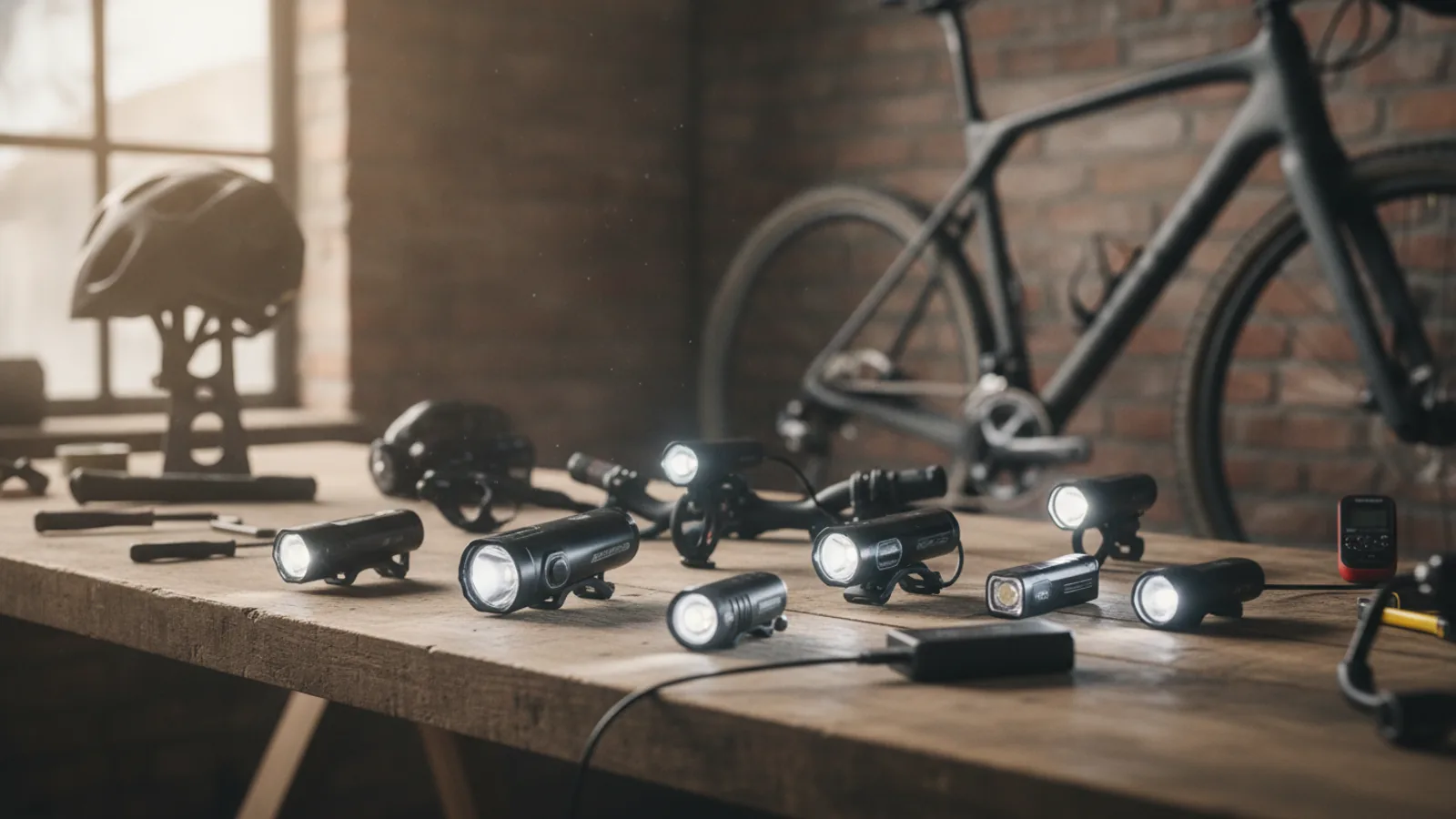
Quick Comparison
Exposure Strada
- Road-specific dipped beam
- OLED status display
- Made in the UK
Lezyne Lite Drive
- Excellent build quality
- Powerful daytime flash
- Great value for power
Magicshine Monteer
- Immense 8000-lumen output
- Flood and spot beam combo
- Long-lasting battery pack
Exposure Joystick
- Legendary reliability
- Compact and lightweight
- Versatile helmet or bar mount
Cateye AMPP 500
- Dependable performance
- Excellent side visibility
- Simple, robust mount
The Best Bike Lights of 2026
- Exposure Strada MK12 RS - Best overall
- Lezyne Lite Drive 1200+ - Best for commuting
- Magicshine Monteer 8000S V3.0 - Best for off-road
- Exposure Joystick MK18 - Best for bikepacking
- Cateye AMPP 500 - Best on a budget
How We Chose the Best Bike Lights
Our selection process is grounded in practical application for UK cyclists. We prioritise lights that address the challenges of our varied terrain and weather. This isn't just about the highest lumen count; we assess beam quality, usable runtimes (not just manufacturer claims), durability, weather-sealing, and the security of the mounting system. Our recommendations are based on a deep analysis of product specifications, beam comparison data from independent testers, and a synthesis of public feedback from long-term users. We look for patterns in reliability and performance that mark a product out as a sound investment for year-round riding.
The Best Bike Lights
Exposure Strada MK12 RS
The Exposure Strada MK12 RS is the definitive light for the serious UK road cyclist. Engineered and manufactured in West Sussex, it's a premium system designed specifically for unlit lanes and fast commutes. Its standout feature is a dipped, road-specific beam pattern that illuminates the road ahead brilliantly without dazzling oncoming drivers. The CNC-machined aluminium body is robust, and the intuitive OLED display shows remaining runtime in real-time, removing all guesswork. While it represents a significant investment, its performance, build quality, and thoughtful design make it the best front light for dedicated road riders.
Pros
- Superb road-specific beam prevents dazzling
- OLED screen provides precise runtime data
- Exceptional UK-based build quality and support
- Smart Port+ for accessories and fast charging
Cons
- Premium price point
- Integrated battery is not user-replaceable
Key Buying Notes
The Strada's beam is its key selling point. Unlike a simple circular beam from many competitors, it projects a wider, flatter pattern that lights up the verges and road surface far ahead. The included remote switch is genuinely useful for toggling modes without moving your hands from the bars. If your riding involves significant time on unlit B-roads and you value consideration for other road users, the Strada is in a class of its own.
Lezyne Lite Drive 1200+
For the daily commuter and all-round road cyclist, the Lezyne Lite Drive 1200+ hits a sweet spot of power, build quality, and price. Its 1200-lumen max output is more than enough for dark sections of a commute, but its real strength lies in its versatility. The array of modes, including a highly visible 'Daytime Flash', makes it adaptable to any condition. The CNC-machined aluminium body feels robust and dissipates heat effectively, while the USB-C charging brings it up to date. It offers a significant slice of premium performance at a much more accessible price point than boutique brands.
Pros
- Strong maximum output for the price
- Excellent build quality with good heat management
- Modern USB-C charging port
- Effective 'Daytime Flash' mode for visibility
Cons
- Rubber strap mount can slip on some bars
- Beam pattern is a simple cone, not shaped
Key Buying Notes
The Lite Drive 1200+ is a workhorse. It's tough, bright, and easy to use. The single-button operation cycles through modes logically, and the button itself acts as a battery life indicator. While the silicone strap is versatile, for ultimate security on rough roads, ensure your bars are clean and the strap is pulled very tight. Its long runtimes on lower-power settings (e.g., 8 hours at 300 lumens) make it a viable option for longer, less demanding rides too.
Magicshine Monteer 8000S V3.0
When you need to turn night into day on the trails, the Magicshine Monteer 8000S is the answer. This is a dedicated off-road lighting system that prioritises maximum power above all else. With a staggering 8000-lumen output from five LEDs, it throws an incredibly wide and far-reaching beam, illuminating every root, rock, and drop-off. The system uses a separate, high-capacity battery pack, ensuring long runtimes even at high power settings. The combination of flood and spot optics provides excellent peripheral vision and long-distance throw simultaneously. It's overkill for the road, but essential for fast, technical night-time mountain biking.
Pros
- Absolutely immense light output
- Excellent beam pattern for trail riding
- Large external battery provides long runtimes
- Robust alloy housing and secure Garmin-style mount
Cons
- External battery pack is bulky and requires mounting
- Too powerful and un-shaped for road use
- High price tag
Key Buying Notes
The Monteer 8000S is a specialist tool. The light head mounts to your handlebars, while the battery pack straps to your frame. This separation keeps the weight on the bars low but adds the complication of a cable. The wireless remote is a great addition for changing modes without taking your hands off the grips, which is crucial on technical terrain. For serious UK trail centre night laps or off-piste adventures, this level of illumination provides a huge confidence boost.
Exposure Joystick MK18
The Exposure Joystick is an icon in the world of bikepacking and endurance riding for good reason: it's compact, lightweight, and phenomenally reliable. While not the most powerful light for its price, it's engineered for efficiency and durability. Its simple, cable-free design and versatile mounting options (both helmet and handlebar mounts included) make it perfect for stripped-back, long-distance setups. The Joystick's strength lies in its excellent runtimes on sensible, all-night power levels. It's the fit-and-forget light you can trust to get you through a multi-day event or a remote tour without fuss.
Pros
- Superb reliability and build quality
- Lightweight and very compact design
- Versatile—excellent as a helmet or bar light
- Efficient electronics deliver long, usable runtimes
Cons
- Lower lumen output than competitors at a similar price
- Proprietary charger (though USB adapters are available)
Key Buying Notes
The Joystick is best viewed as part of a system. Its primary role in bikepacking is often as a helmet light, paired with a handlebar light. This allows you to illuminate corners or look at maps while keeping a main beam on the track ahead. Its focused, circular beam is perfect for this task. The single-button operation and simple mode indicator are designed for tired minds and gloved hands. If reliability and low weight are your absolute priorities for remote riding, the Joystick remains the benchmark.
Cateye AMPP 500
The Cateye AMPP 500 proves that you don't need to spend a fortune to get a safe, reliable, and effective front light. Offering a solid 500 lumens, it's a huge step up from basic 'be-seen' lights and provides enough power to navigate lit streets and even darker cycle paths. Cateye's reputation for durability is well-earned, and the AMPP 500 is no exception, with a tough body and a simple, secure Flextight bracket. Its beam has excellent side visibility, a crucial feature for being seen at junctions. For the commuter or occasional night rider on a budget, this is a smart, no-nonsense choice.
Pros
- Excellent value for money
- Very good side visibility for urban riding
- Robust, simple, and reliable design
- Secure and easy-to-use mounting bracket
Cons
- 500 lumens is insufficient for fast, unlit roads
- Uses the older Micro-USB charging standard
- Runtimes on full power are relatively short
Key Buying Notes
The AMPP 500 is a perfect 'to see with' light for urban and suburban environments. The 500-lumen high mode is bright enough for dark patches, but the 250-lumen low mode is often sufficient and doubles the runtime to 3 hours. The Daytime HyperConstant mode is also a great feature for standing out in traffic. While it lacks the raw power for high-speed rural riding, as a dependable tool for the daily commute, it's hard to beat for the price.
Buying Guide: How to Choose the Best Bike Lights
Navigating the specifications of bike lights can be confusing. Here’s a practical breakdown of what matters for UK riding.
Lumens: How Bright is Bright Enough?
Lumens measure the total light output. More isn't always better; it's about matching power to your environment.
- Urban Commuting (To Be Seen): 100-500 lumens. In well-lit areas, the primary goal is visibility to other road users. Good side visibility and a flashing mode are key.
- Unlit Roads / Dark Lanes (To See): 800-1500+ lumens. You need enough power to illuminate the road surface, verges, and potential hazards far enough ahead to react at speed.
- Off-Road / MTB: 1500-8000+ lumens. Technical trails require a very wide and powerful beam to see lines, spot obstacles, and judge terrain. A helmet light is often used in conjunction with a bar light.
Beam Pattern: Shape Matters More Than Power
A 1000-lumen light with a poor beam is less useful than an 800-lumen light with a great one. Road lights, like the Exposure Strada, use shaped lenses to create a wide, flat beam that lights the road without blinding oncoming traffic, similar to a car's dipped headlight. Off-road lights typically use a simpler conical beam, often with a mix of 'flood' and 'spot' optics to give both wide peripheral vision and long-distance throw.
Battery Life & Charging
Always check the runtime for the specific mode you'll use most, not just the maximum flashing mode which can be misleadingly long. For long commutes or rides, an external power pack or a light that can be charged while in use is a bonus. USB-C is now the modern standard, offering faster charging and a more robust, reversible connector than the older Micro-USB.
Mounting Systems
A light is useless if it doesn't stay pointed where you need it. Silicone strap mounts are common and versatile but can sometimes slip on certain handlebar shapes or sizes. More secure clamp-style mounts, like those from Exposure or Cateye, are often preferred for rougher surfaces. For off-road, a helmet mount is invaluable for lighting up the corners you're looking into.
Weather Resistance (IP Rating)
For UK riding, good weather resistance is non-negotiable. Look for an IPX rating. IPX4 is splash-proof and suitable for light rain. IPX6 or IPX7 offers much better protection against heavy, persistent rain and is recommended for year-round commuters and enthusiasts.
Final Verdict: Best Bike Lights 2026
Choosing the right bike light is a critical investment in your safety and enjoyment of riding after dark. After thorough analysis, the Exposure Strada MK12 RS stands out as the best overall bike light for the dedicated road cyclist. Its intelligent, road-specific beam, impeccable build quality, and user-friendly features justify its premium price for those who frequently ride on unlit roads.
If your budget is more modest or your needs are focused on commuting, the Lezyne Lite Drive 1200+ offers fantastic performance and build quality for the money. And for those venturing onto the darkest trails, the sheer power of the Magicshine Monteer 8000S V3.0 is unmatched. Whatever your riding discipline, one of the lights in this guide will provide the reliable illumination you need to ride with confidence.
Best Bike Lights 2026 FAQ
How many lumens do I need for a bike light in the UK?
It depends entirely on where you ride. For lit urban streets where you just need to be seen, 200-500 lumens with a flashing mode is sufficient. For unlit country lanes where you need to see the road ahead clearly, aim for at least 800-1200 lumens. For off-road trail riding, 1500 lumens is a minimum, with many riders preferring 2000 lumens or more.
What are the legal requirements for bike lights in the UK?
The UK's Road Vehicles Lighting Regulations state that between sunset and sunrise, your bike must have a white front light and a red rear light. The front light can be flashing or steady, and the rear must also be lit. While older regulations specified compliance with BS6102/3, modern high-power LED lights far exceed these standards. The key is to be visible and, for front lights, to avoid dazzling other road users.
Can I use a helmet light instead of a handlebar light?
A helmet light is an excellent addition to a handlebar light, but it shouldn't be your only front light. A bar-mounted light provides a more stable beam that better highlights road texture and potholes. A helmet light is fantastic for looking into corners, spotting signs, or for trailside mechanicals. The ideal setup, especially for off-road or technical riding, is to use both.
What is the difference between 'to be seen' and 'to see with' lights?
'To be seen' lights are typically lower power (under 500 lumens) and are designed for use in well-lit urban areas or during the daytime to increase your visibility to drivers. 'To see with' lights are higher power (800+ lumens) and cast a strong enough beam to fully illuminate a dark road or trail, allowing you to ride at speed safely.